To recover a secret,
they had to
create a fiction.
In March 1968, the Soviet submarine K-129 vanished into the North Pacific. What lay three miles below the surface could change the balance of the Cold War.
While Soviet forces searched in vain, the U.S. Navy located the wreck. On board were some of the Soviet Union’s most guarded secrets: a nuclear-tipped missile, nuclear torpedoes, and highly sensitive cryptographic material.
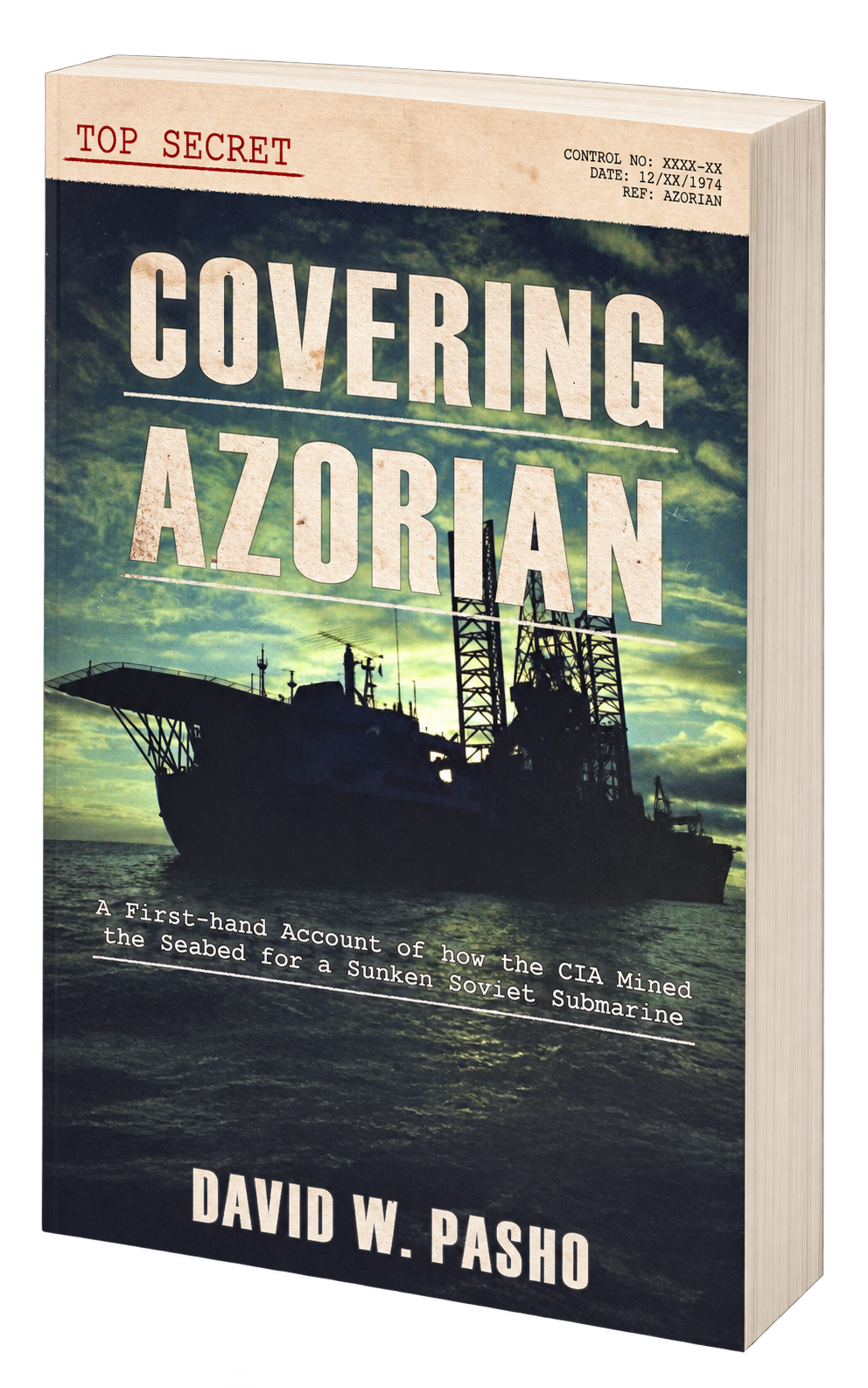
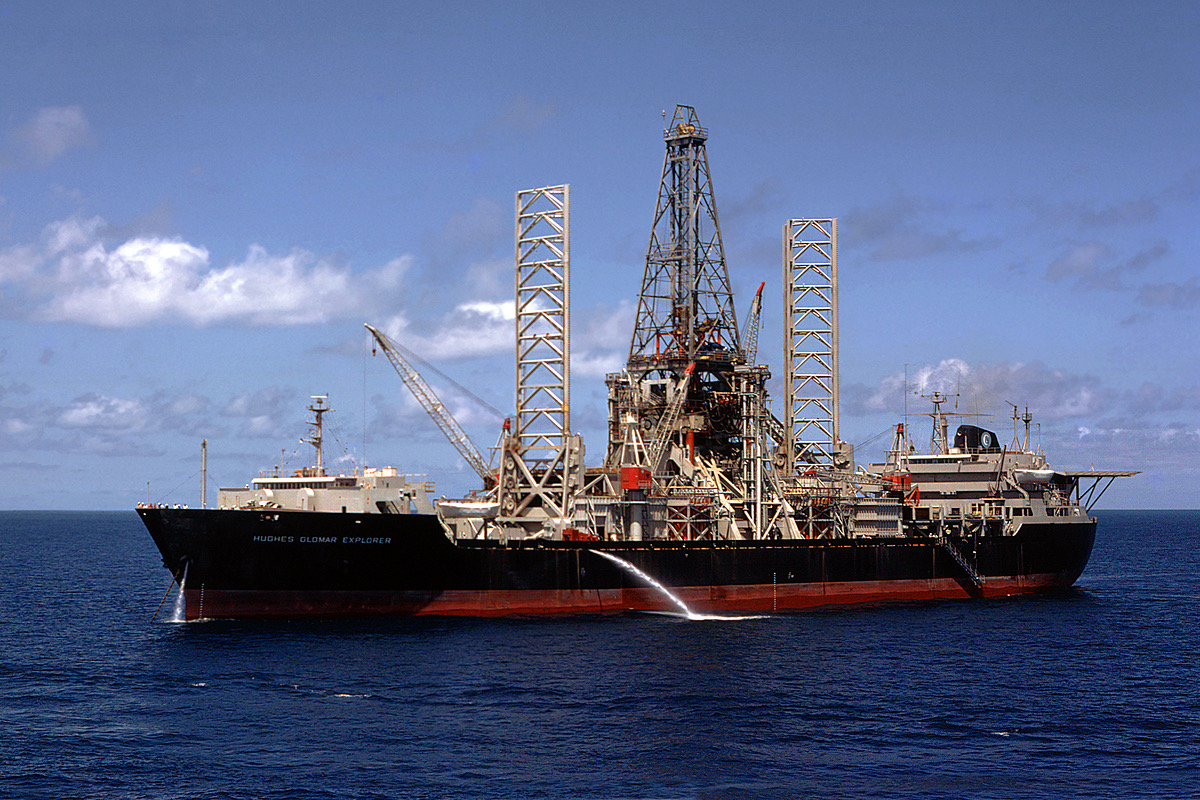
The CIA’s response was Project Azorian: a plan to recover the submarine in secret using the massive Hughes Glomar Explorer. Its engineering was extraordinary. Its cover story had to be just as convincing.
The world saw Howard Hughes mining the seabed.
The CIA was reaching for a Soviet submarine.

THE AUTHOR / OTTAWA, CANADA
He was there.
Now, he tells the story.
David W. Pasho
David W. Pasho is an author, photographer, retired Canadian public servant, and marine geologist. Over his distinguished career, he served in various leadership roles related to natural resource management and policy innovation, including positions as Executive for Strategic Priorities and Director of Sustainable Development Policy at Natural Resources Canada.
He is the author of Photographing Gymnastics: Technical and Artistic Perspectives, a comprehensive guide inspired by his time capturing images for his daughter’s gymnastics club to help parents take better action photos.
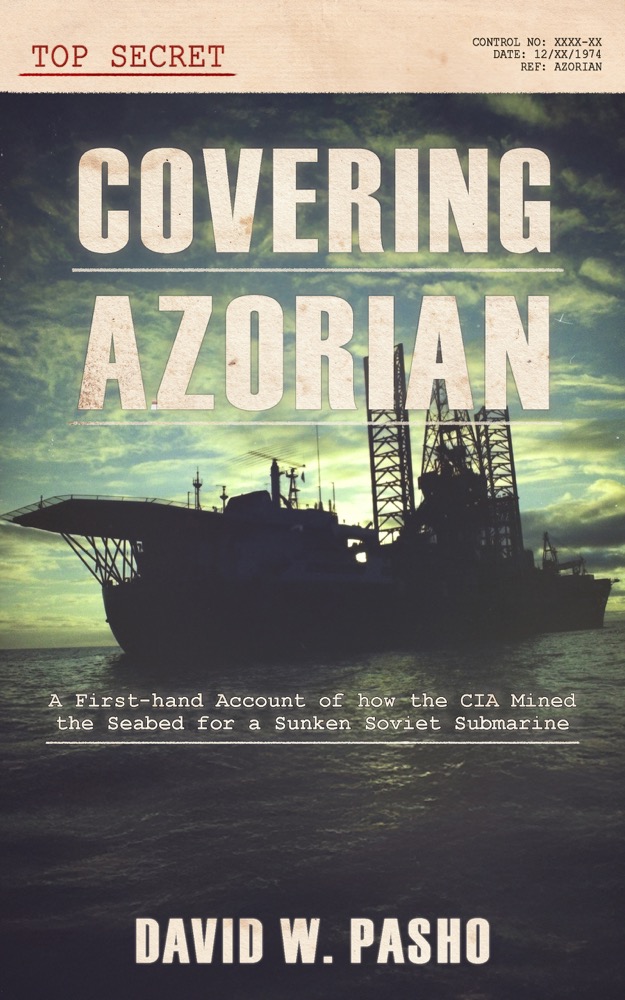
His latest book, Covering AZORIAN, offers a gripping, first-hand account of the cover story created for Project Azorian—the CIA’s highly covert operation to recover a sunken Soviet submarine from the North Pacific floor. As the last surviving member of the elite, compact team that designed and maintained the deep seabed mining cover story, Pasho wrote the book to finally document this critical, untold chapter of modern history.
He lives in Ottawa, where he is currently researching his next nonfiction book, which traces the evolution of women’s dance and sport that ultimately led to rhythmic gymnastics becoming an Olympic event.